

Calcium hypochlorite granules are a well - known and widely used chemical product, especially in the field of water treatment and disinfection. As a supplier of calcium hypochlorite granules, I often receive inquiries from customers about the stability of this product. In this blog, I will comprehensively discuss the stability of calcium hypochlorite granules, including factors affecting stability, storage conditions, and how stability relates to its effectiveness.
Chemical Properties and Initial Stability
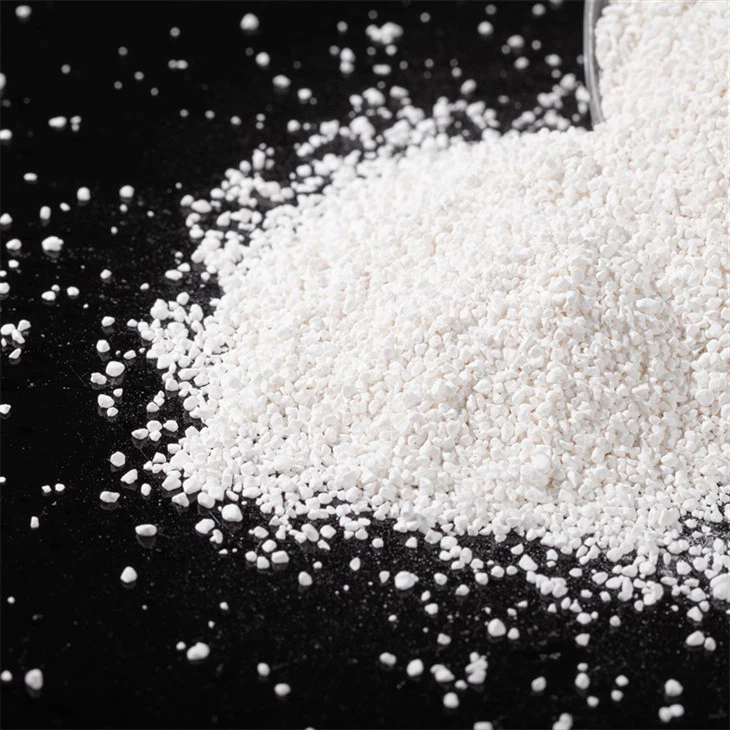
Calcium hypochlorite, with the chemical formula Ca(ClO)₂, is a white granular solid. It is a strong oxidizing agent and is highly effective in killing bacteria, viruses, and other pathogens. When produced, calcium hypochlorite granules are relatively stable under normal conditions. The granules are designed to have a certain structure that encapsulates the active ingredient, hypochlorite ions (ClO⁻), protecting them from immediate decomposition.
The initial stability of calcium hypochlorite granules is mainly determined by the manufacturing process. High - quality production methods ensure a more uniform granule size and a better - structured surface, which can prevent premature release of the active ingredient. For example, advanced granulation techniques can create a dense outer layer on the granules, which acts as a barrier against moisture and air, two factors that can initiate the decomposition of calcium hypochlorite.
Factors Affecting the Stability of Calcium Hypochlorite Granules
Moisture
Moisture is one of the most significant factors that can affect the stability of calcium hypochlorite granules. When calcium hypochlorite comes into contact with water, a series of chemical reactions occur. The hypochlorite ions react with water to form hypochlorous acid (HClO), which is the active disinfecting species. However, in the presence of excess moisture, the decomposition of calcium hypochlorite can accelerate.
The reaction can be represented as follows:
Ca(ClO)₂ + 2H₂O ⇌ Ca(OH)₂+ 2HClO
If the environment is too humid, the continuous production of hypochlorous acid can lead to further decomposition, releasing chlorine gas (Cl₂). This not only reduces the effectiveness of the calcium hypochlorite granules but also poses a safety hazard. Therefore, it is crucial to store calcium hypochlorite granules in a dry place.
Temperature
Temperature also plays a vital role in the stability of calcium hypochlorite granules. Higher temperatures can increase the rate of chemical reactions. As the temperature rises, the decomposition of calcium hypochlorite becomes more rapid. At elevated temperatures, the kinetic energy of the molecules increases, making it easier for the hypochlorite ions to react with other substances or to break down into other compounds.
For example, at temperatures above 30°C, the decomposition rate of calcium hypochlorite can be significantly higher than at lower temperatures. Prolonged exposure to high temperatures can cause the granules to lose their structural integrity, leading to caking and a decrease in the available chlorine content.
Air and Oxygen
Although calcium hypochlorite is stable in air under normal conditions, prolonged exposure to oxygen can gradually cause oxidation and decomposition. Oxygen can react with the hypochlorite ions, reducing their concentration in the granules. Additionally, air often contains small amounts of carbon dioxide (CO₂), which can react with calcium hypochlorite in the presence of moisture.

The reaction with carbon dioxide is as follows:
Ca(ClO)₂ + CO₂+ H₂O ⇌ CaCO₃+ 2HClO
This reaction not only consumes calcium hypochlorite but also forms calcium carbonate, which can accumulate on the surface of the granules and further affect their performance.
Storage Conditions for Maintaining Stability
To ensure the stability of calcium hypochlorite granules, proper storage conditions are essential.
Dry Environment
As mentioned earlier, moisture is a major threat to the stability of calcium hypochlorite. Therefore, the storage area should be dry, with a relative humidity of less than 50%. It is recommended to store the granules in sealed containers or bags to prevent moisture from entering. If possible, desiccants can be placed in the storage area to absorb any excess moisture.
Cool Temperature
The storage temperature should be kept as low as possible, preferably below 25°C. A cool environment can slow down the decomposition rate of calcium hypochlorite. Warehouses or storage rooms should be well - ventilated to prevent the build - up of heat.
Isolation from Other Chemicals
Calcium hypochlorite should be stored separately from other chemicals, especially organic compounds and reducing agents. These substances can react with calcium hypochlorite, leading to dangerous chemical reactions, such as fires or explosions. For example, if calcium hypochlorite comes into contact with ammonia - containing compounds, it can produce toxic chloramines.
Comparison with Other Disinfectants in Terms of Stability
When comparing calcium hypochlorite granules with other disinfectants such as Sodium Dichloroisocyanurate Granules, Sodium Dichloroisocyanurate Disinfectant, and Trichlor, there are some differences in stability.
Sodium dichloroisocyanurate is generally more stable than calcium hypochlorite. It has a lower reactivity with moisture and air, and its decomposition rate is slower under normal storage conditions. Trichlor, on the other hand, is also relatively stable but has different chemical properties and application scenarios. Trichlor is often used in swimming pools and can gradually release chlorine over time, while calcium hypochlorite provides a more immediate release of chlorine.
The Relationship between Stability and Effectiveness
The stability of calcium hypochlorite granules is directly related to its effectiveness as a disinfectant. A stable product can maintain a high concentration of available chlorine over a longer period. When the granules are stable, the hypochlorite ions are protected and can be released in a controlled manner when needed.
If the granules lose their stability due to improper storage or environmental factors, the available chlorine content will decrease. This means that less hypochlorous acid will be produced when the product is used, resulting in a reduced disinfection ability. Therefore, ensuring the stability of calcium hypochlorite granules is crucial for achieving effective disinfection.
Conclusion and Call to Action
In conclusion, the stability of calcium hypochlorite granules is affected by multiple factors, including moisture, temperature, and air. By following proper storage conditions, such as keeping the product in a dry, cool place and isolating it from other chemicals, the stability and effectiveness of the granules can be maintained.
As a supplier of high - quality calcium hypochlorite granules, I am committed to providing products with excellent stability. If you are in need of calcium hypochlorite granules for water treatment, disinfection, or other applications, I encourage you to contact me for more information and to discuss your specific needs. We can work together to ensure that you get the most suitable product for your requirements.
References
- "Handbook of Chemical Disinfectants"
- "Water Treatment Chemicals: Principles and Applications"