

Hey there! I'm a supplier of Sulphamic Acid Powder, and today I wanna talk about how this nifty chemical reacts with silicates. Let's dive right in!
What is Sulphamic Acid Powder?
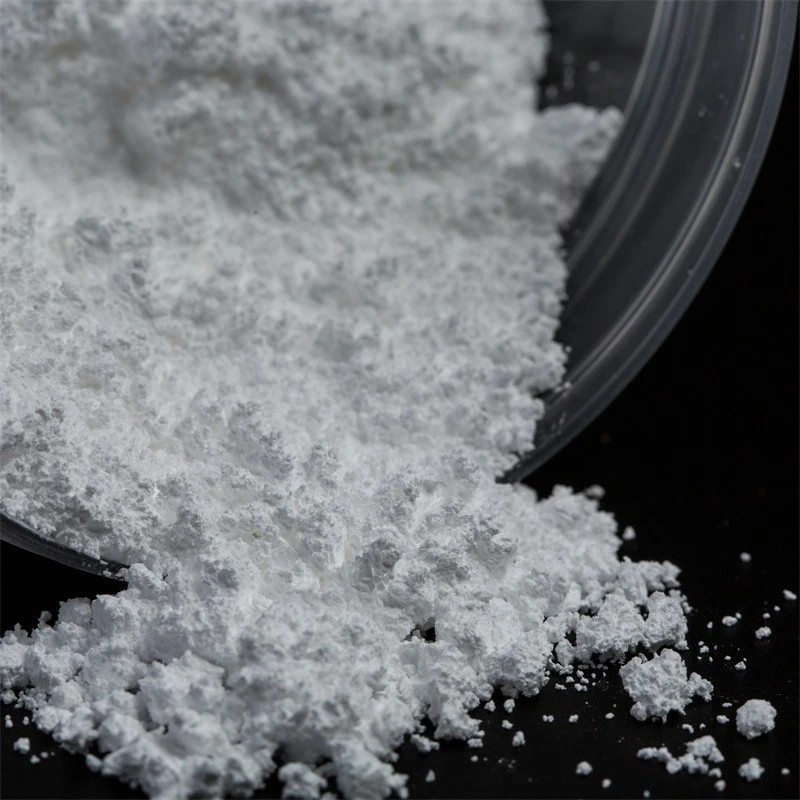
First things first, let's get to know Sulphamic Acid Powder a bit. You can check out more details about Sulphamic Acid Powder. It's a white, crystalline solid that's widely used in various industries. One of the cool things about it is its low volatility, which means it doesn't easily turn into a gas. This makes it relatively safe to handle compared to some other strong acids.
It's also a very stable compound under normal conditions. But when it gets in contact with certain substances, things can get interesting. And silicates are definitely one of those substances worth exploring.
What are Silicates?
Silicates are everywhere! They're a group of minerals that contain silicon and oxygen, often combined with other elements like aluminum, iron, magnesium, etc. They make up a huge part of the Earth's crust. Some common examples of silicate minerals are quartz, feldspar, and mica.
Silicates have a wide range of properties and uses. They're used in the construction industry for making cement, ceramics, and glass. In the electronics industry, they're used in semiconductors. And in personal care products, they can be found as abrasive agents.
The Reaction Mechanism
Now, let's talk about how Sulphamic Acid Powder reacts with silicates. The reaction is an acid - base type reaction. Sulphamic acid is a relatively strong acid, and silicates can act as bases in this context.
When Sulphamic Acid comes into contact with silicates, the acid donates a proton (H⁺) to the silicate structure. The silicate structure, which usually has an oxygen atom with a negative charge, accepts this proton. This protonation can break some of the Si - O bonds in the silicate.
For example, in the case of simple silicate anions like orthosilicate (SiO₄⁴⁻), the reaction can be represented as follows:
H₂NSO₃H + 1/4SiO₄⁴⁻ → H₂NSO₃⁻ + 1/4Si(OH)₄

The hydrogen from the sulphamic acid replaces one of the negative charges on the silicate, and a new silicon - hydroxide compound is formed.
In more complex silicate structures, such as those in feldspar or clays, the reaction is more complicated. The acid may attack different parts of the three - dimensional silicate network. The Si - O - Si bonds that hold the network together can be broken, leading to the disruption of the structure.
Factors Affecting the Reaction
Several factors can influence how Sulphamic Acid Powder reacts with silicates.
Concentration of Sulphamic Acid
A higher concentration of Sulphamic Acid generally means a faster reaction rate. With more acid molecules available, there are more chances for the acid to collide with the silicate particles and initiate the reaction. However, too high of a concentration might also lead to excessive reaction, which could cause problems depending on the application.
Temperature
Increasing the temperature usually speeds up the reaction. At higher temperatures, the molecules have more kinetic energy, so they move around faster and collide more frequently. For the reaction between Sulphamic Acid and silicates, a moderate increase in temperature can significantly enhance the reaction rate. But if the temperature is too high, it could also cause other issues, such as the decomposition of the products or the acid itself.
Particle Size of Silicates
Smaller particle sizes of silicates expose more surface area to the acid. This means that there are more sites for the acid to react with, resulting in a faster reaction. If the silicate particles are large, it might take longer for the acid to penetrate and react with the inner parts of the particles.
Applications of the Reaction
Scale Removal
One of the main applications of the reaction between Sulphamic Acid and silicates is in scale removal. Silicate scales can form in pipes, boilers, and other industrial equipment over time. These scales can reduce the efficiency of the equipment and even cause blockages.
Sulphamic Acid can be used to dissolve these silicate scales. When the acid reacts with the silicate scale, it breaks down the scale into smaller, soluble compounds that can be easily washed away. This helps to maintain the proper functioning of the equipment.
Surface Treatment
In the surface treatment industry, the reaction can be used to modify the surface properties of silicate - based materials. For example, in the production of glass or ceramics, treating the surface with Sulphamic Acid can change the surface roughness or chemical composition. This can improve the adhesion of coatings or the wettability of the surface.
Safety Considerations
When working with Sulphamic Acid Powder and silicates, safety is super important. Sulphamic Acid is an acid, so it can cause skin and eye irritation. You should always wear appropriate personal protective equipment (PPE), such as gloves and safety goggles when handling it.
Also, the reaction between the two can produce heat, especially if it's a large - scale reaction. It's important to control the reaction conditions to prevent overheating or other hazardous situations.
Another Chemical in Our Portfolio: Melamine Cyanurate Flame Retardant
Hey, I also wanna mention another chemical that we offer - Melamine Cyanurate Flame Retardant. It's a great choice for industries that need to enhance the fire - resistance of their products. It can be added to polymers, plastics, and other materials to reduce their flammability.
Contact Us for Procurement
If you're interested in Sulphamic Acid Powder or Melamine Cyanurate Flame Retardant for your business, we're here to help. Whether you need it for scale removal, surface treatment, or any other application, we can provide high - quality products. Just reach out to us for more information and to start a procurement discussion. We're looking forward to working with you!
References
- "Chemistry of Inorganic Materials" by Anthony R. West
- "Industrial Chemistry" by J. A. Kent